
ABOUT US
The Salvation Army, an international movement, is an Evangelicalpart of the universal Christian Church.
Its message is based on the Bible. Its ministry is motivated by the love of God.
Its mission is to preach the gospel of Jesus Christ and to meet human needs in his name without discrimination.
Our Story
The Salvation Army in Zambia is currently led by Colonels Alfred and Pamela Banda, who serve as Territorial Commander and Territorial President for Women’s Ministries respectively, with Lieutenant Colonels Shawn Critch as Chief Secretary and Brenda Critch as Spiritual Life Development Secretary. The Territorial Headquarters is located along the Great North Road at the Great North Road Business Centre, a modern three-storey building owned by the Salvation Army and officially opened in 2019; the organization operates from the second floor, while the ground and first floors are rented out.
The history of the Salvation Army in Zambia dates back to 1922, when men led by Mathew Mbiri from villages on the north bank of the Zambezi were converted while working in mica mines in Zimbabwe. Upon returning home, they shared their faith and experiences, sparking interest among local communities who then requested the establishment of the Salvation Army in their area. The movement began in the village of Chief Chipepo Siakalyabanyama, and two years later Commandant Kunzwi Shava and Lieutenant Paul Shumba, officers from what was then the Rhodesia Territory, were appointed to lead the new mission.
Today, the Salvation Army operates in eight provinces across Zambia and has grown from a single center to 442 worship centers nationwide. Its administrative structure includes seven divisions, five districts, and four sections, supported by two farms used for income-generating activities. Membership includes over 30,883 senior soldiers, 12,656 junior soldiers, 1,547 adherents, and 239 employees. The organization is served by 235 active officers, ten of whom are stationed outside the territory, as well as 69 retired officers.
Culture and tradition
Greeting First
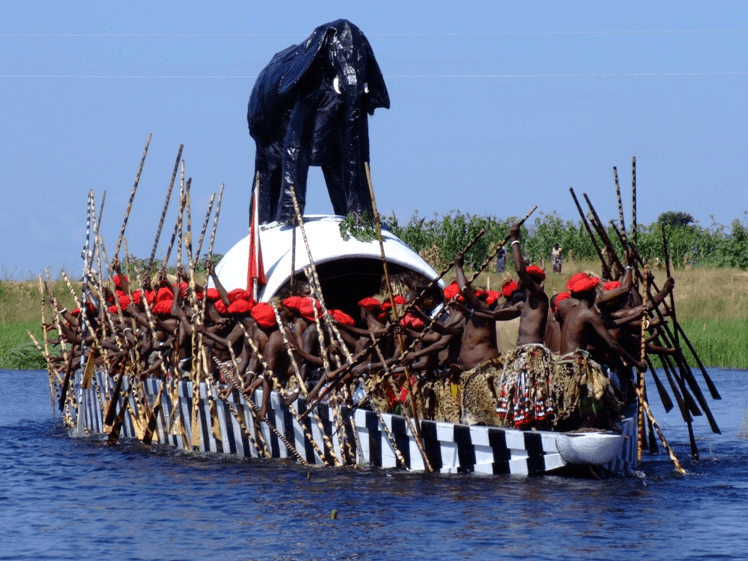
Greetings are an essential part of the Zambian culture, regardless of age or social status. Ifapproached by someone, a greeting should be offered before engaging in conversation. When different genders are involved, the female initiates the greeting, and the male responds. Visitors are given gifts when leaving as a sign of gratitude, friendship, or honor, and refusing a gift is considered disrespectful.
Tourism
Zambia boasts 20 national parks and reserves, along with 34 Game Management Areas, protecting over 30% of its land and making it one of Africa’s key conservation destinations. Among its rich wildlife, the country is home to the famous “Big Five” animals: lion, leopard, rhinoceros, elephant, and buffalo. The term “Big Five” originated from big-game hunters, referring to these animals as the most difficult and dangerous to hunt on foot due to their strength and unpredictability. Today, however, they are among the most sought-after species for wildlife viewing and conservation tourism, attracting visitors from around the world.

Finally
The people of Zambia are widely known for their warmth, friendliness, and kindness—qualities that often leave a lasting impression on visitors. It is common for locals to greet others with genuine interest, asking how they are, where they come from, and how they are enjoying the country. Expressions of gratitude are usually met with bright smiles and a heartfelt “you’re welcome,” reflecting a culture rooted in respect and hospitality. One of the most noticeable aspects of daily life is the prevalence of smiling—whether among friends, strangers, or visitors—which creates an atmosphere of openness and ease.
Communication is also relatively easy, as English is widely spoken across the country. Even in cases where language barriers exist, people often make the effort to communicate through gestures and friendly expressions. Zambians are generally laid-back and accommodating, making it possible for visitors to move comfortably even in busy local markets without feeling out of place or pressured. Courtesy, such as greeting others, is an important part of social interaction and is seen as a sign of respect.
This spirit of unity and harmony is captured in the national motto, “One Zambia, One Nation,” which emphasizes cohesion among the country’s more than 70 ethnic groups and highlights a strong sense of national identity.
Guiding Core Values
Our identity and God – given mission as disciples of Jesus Christ are shaped by the values of the kingdom of God. Our core values are;
- Participation.
- Excellence.
- Equality & equity.
- Transparency.
- Accountability.
- Integrity.
- Team work.